

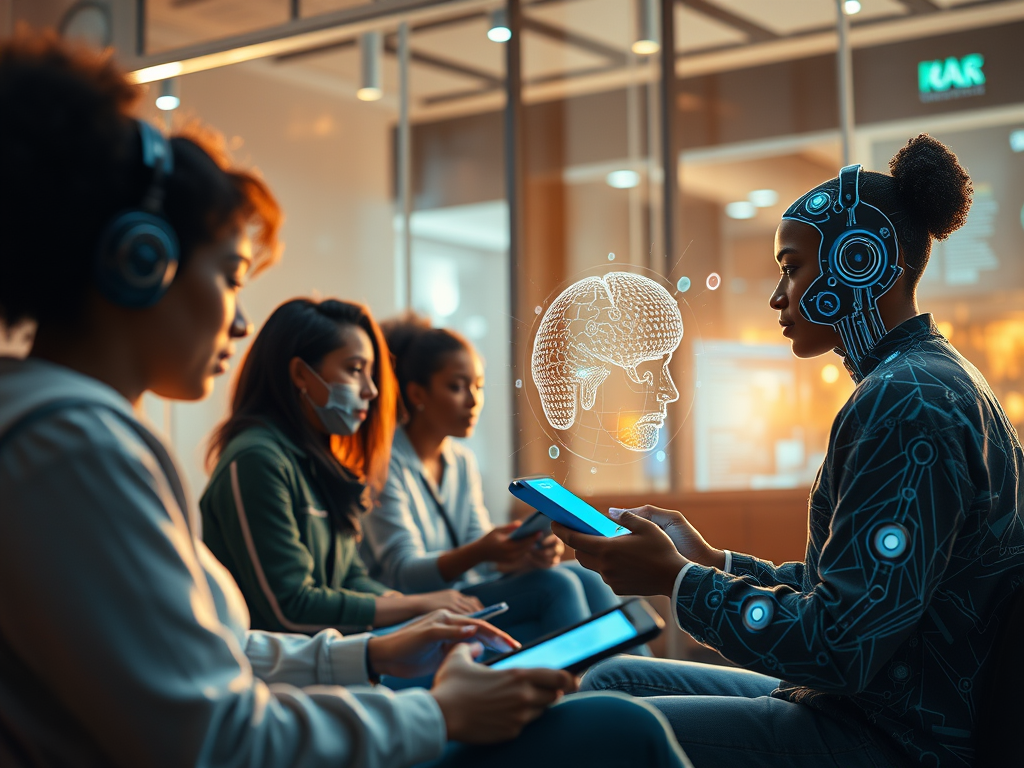
Artificial Intelligence Impacting the Field: AI is becoming integral to therapy, research, and various sectors. Psychologists are prompted to integrate AI tools into their practices. They must guarantee patient privacy.
New Approaches in Equity, Diversity, and Inclusion: Psychologists are using science-backed strategies. These strategies help them navigate challenges. They also help sustain commitments to equity, diversity, and inclusion.
Psychology Pulse: In-Depth Review on Emerging Trends in 2025
Introduction
The field of psychology is constantly evolving, with new trends, research findings, and case studies shaping our understanding of human behavior and mental health. In 2025, several key trends are influencing the direction of psychological science and practice. This review explores these trends, providing insights into their implications and applications.
Current Trends in Psychology
Mental Health Technology
The integration of technology in mental health care is advancing rapidly. Digital therapeutics, teletherapy, and AI-driven mental health apps are becoming more prevalent, offering accessible and personalized support to individuals. These innovations are particularly beneficial in addressing the shortage of mental health providers and reaching underserved communities.
Generative AI in Psychology
Generative AI is transforming various aspects of psychology, from research to clinical practice. Psychologists are leveraging AI to enhance therapy, conduct complex data analyses, and develop new interventions. This technology promises to simplify tasks and amplify efforts, but it also raises ethical considerations that need careful navigation.
Equity and Inclusion
Despite ongoing challenges, psychologists are persevering in their efforts to promote equity and inclusion. This involves addressing mental health disparities, advocating for policies that support marginalized groups, and developing culturally sensitive interventions. The backlash against racial equity work highlights the need for continued commitment and innovation in this area.
Recent Research Findings
Impact of Air Pollution on Brain Connectivity
Recent studies have shown that exposure to air pollution during childhood is associated with reduced brain connectivity. This finding underscores the importance of environmental factors in cognitive development and mental health, prompting further research into preventive measures and interventions.
Sleep Stages and Alzheimer’s Disease
New research reveals that lower proportions of specific sleep stages are linked to brain changes associated with Alzheimer’s disease. This highlights the critical role of sleep in brain health and the potential for sleep-based interventions to mitigate the risk of neurodegenerative diseases.
Dopamine and Cognitive Flexibility
PET imaging studies have confirmed a direct link between dopamine production and cognitive flexibility. This discovery provides valuable insights into the neurobiochemical mechanisms underlying cognitive processes and opens avenues for targeted treatments for cognitive impairments.
Case Studies in Psychology
The Marshmallow Experiment
Conducted by Walter Mischel, this classic experiment explored the concept of delayed gratification and its correlation with success in life. Children who could wait for a larger reward demonstrated higher SAT scores and better life outcomes, supporting theories of self-control and its impact on behavior.
Genie Wiley
The case of Genie Wiley, a victim of extreme isolation, provided profound insights into the effects of early language deprivation on cognitive development. Studied extensively in the 1970s, Genie’s case highlighted the critical periods for language acquisition and the long-term consequences of neglect.
Phineas Gage
Phineas Gage’s case is one of the most famous in neuropsychology, illustrating the impact of brain injury on personality and behavior. After a tamping iron pierced his skull, Gage’s personality underwent significant changes, providing early evidence of the brain’s role in regulating behavior.
Conclusion
The trends, research findings, and case studies discussed in this review reflect the dynamic nature of psychology in 2025. As technology continues to advance and societal challenges evolve, psychologists are uniquely positioned to contribute to a healthier, more equitable world. By staying informed and engaged, we can leverage these insights to enhance our understanding and improve mental health outcomes.